• What’s the best housing market in Southern California?

    What’s the best housing market in Southern California?

    It’s always interesting to see how different Southern California cities stack up when it comes to their housing markets. Irvine currently ranks 10th nationally for real estate and local economics, while Ontario, Murrieta, San Diego, and Chula Vista are also among the region’s top performers. On the other end, Palmdale finds itself ranked worst locally and ninth-worst in the country.

    As someone who’s spent over 20 years guiding people through buying and selling homes in the High Desert, I know that these rankings are more than just numbers—they reflect real communities and the people who call them home. Whether you’re drawn to a city at the top of the list or facing challenges in a less-celebrated area, it’s about finding the place that’s right for you and your family. I’m here to walk with you through every step, offering honest advice and support as you navigate these important decisions.


    Continue to full article

  • High Desert Farmers Markets: Shop Local, Feel at Home

    High Desert Farmers Markets: Shop Local, Feel at Home

    One of the best parts of living in the High Desert is discovering the local places that bring neighbors together. Farmers markets offer a refreshing way to spend the day while supporting local growers, makers and small businesses. Visit Hesperia on Saturdays from 10 AM–2 PM, Victorville on Thursdays from 8 AM–12 noon, or Phelan on Mondays from 2–6 PM through November. Save this guide, invite a friend and make local living part of your routine. As a local real estate agent, I love sharing the community features that make High Desert neighborhoods feel like home.

    Continue to full article

  • California Home Insurance Is Changing 🔥 What Buyers Need to Know

    California Home Insurance Is Changing 🔥 What Buyers Need to Know

    California home insurance is changing, and buyers should understand the factors behind the shift. Wildfire and catastrophe risk, higher rebuilding and construction costs, inflation, rising reinsurance expenses, and the specific location and characteristics of a property can all affect availability, premiums, deductibles, and coverage. My tip: review your policy and request insurance guidance early in the buying process. Compare limits, exclusions, deductibles, and potential mitigation discounts so you can budget beyond the mortgage. In Hesperia, where recent residential sales have centered around $472,842, insurance affordability remains an important part of evaluating the full cost of a move. Let’s talk about the questions to ask before you buy.

    Continue to full article

  • Rentals Shape California’s Real Estate Future

    As someone who’s walked with clients through countless seasons of change here in the High Desert, I’ve seen firsthand how California’s real estate landscape continues to shift. Right now, homeownership across the state has settled near 55%, and for many, high purchase costs are making renting the more realistic path. Rental demand is still strong—vacancy rates are below 5%, and unless we see a real surge in new construction, that tight supply is likely to stick around (long-term projections keep vacancy under 7%).

    I find it’s often the human factors—like local zoning, rising material costs, labor shortages, and neighborhood concerns—that slow new housing starts and shape what’s truly possible. During this real estate recession, experts are seeing more single-occupancy renters team up and share homes, which could slowly open up more rental options. Even so, for many Californians, renting remains the most flexible alternative, especially for those drawn to city living, job opportunities, and cultural life.

    For me, real estate is always about people, not just numbers. Whether you’re thinking about renting, buying, or just wondering what these changes might mean for your next move, I believe honest guidance and integrity matter most. I’m here to listen, answer your questions, and help you navigate these decisions with confidence.

  • California: Prop 37 $25B Down Payment Loans

    It’s not every day we see a proposal that could change the homebuying journey for so many Californians. There’s a new ballot measure on the table—Prop 37—which would create a $25 billion bond-backed loan program to help residents cover up to about 17% of a down payment on new homes. To qualify, buyers would still need to bring at least 3% to the table, and a primary mortgage would handle the remaining 80%.

    To put this into perspective: in Sacramento County, the average buyer might only need to save around $16,000, and in San Francisco, about $42,000. These loans would be available for new homes from qualifying builders, aiming to make homeownership more reachable for renters and to expand middle-class housing options.

    As someone who’s spent over 20 years guiding people through these big life steps, I know how daunting that initial down payment can feel. While there’s been little formal opposition so far, some concerns have come up about the building requirements and whether every borrower will be set up for success. My commitment remains: to walk with you, answer your questions honestly, and give you the information you need—because decisions like these deserve clarity and care.

  • California’s Dynamic Population Trends Highlight New Opportunities

    California’s Dynamic Population Trends Highlight New Opportunities

    It’s always interesting to see how the numbers reflect the story of our state. Recent research shows that California was one of just five states to see a population decline last year—down by 0.02%, which is about 9,465 people leaving between 2024 and 2025. While national growth dipped below 1%, Vermont actually saw the biggest drop among the five states. For those of us who call California home, these shifts are more than just statistics—they shape our communities, our schools, and our neighborhoods. Our median age is now 39, with just over 5% of residents under 5 years old and 17.5% over 65.

    As a High Desert Realtor, I see every move as a deeply personal decision, not just a change in numbers. Whether you’re considering staying, leaving, or helping loved ones transition, I believe honest guidance and respect matter more than ever. Real estate isn’t just about properties—it’s about the people and stories behind each address.

    Continue to full article

  • Hesperia Homeowners: Is Your Mortgage Becoming a Burden?

    Hesperia Homeowners: Is Your Mortgage Becoming a Burden?

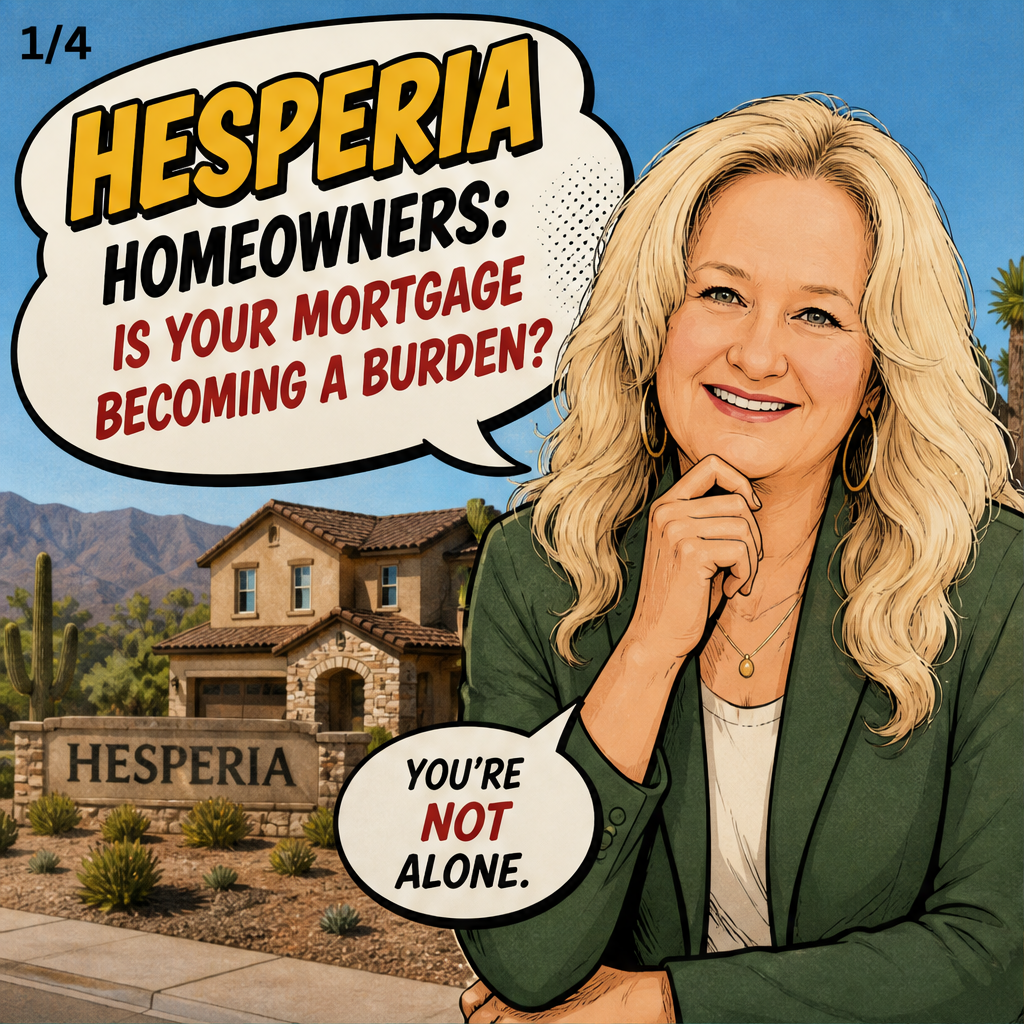
    Mortgage pressure can feel overwhelming, but today’s homeowners may have an important advantage many lacked during the 2008 crisis: equity. California recorded 21,543 foreclosure filings during the first half of 2026, making early action especially important. In Hesperia, the recent median sale price was approximately $472,842. Depending on your loan balance, condition, and market value, equity could support a sale, relocation, or negotiated solution with your lender. This carousel outlines practical next steps. Real estate and lending situations vary, so seek personalized advice before making a decision.

    Continue to full article

  • 🏡 Rent or Buy? Look Beyond the Monthly Payment

    🏡 Rent or Buy? Look Beyond the Monthly Payment

    Higher interest rates can make renting feel like the obvious choice, but the monthly payment is only part of the story. Rent may provide flexibility, while homeownership can allow a portion of each payment to build equity over time. Buyers should also account for taxes, insurance, maintenance, closing costs, and market conditions. Investing for retirement can be valuable too, so the best decision depends on your complete financial picture, timeline, and goals. Hesperia buyers can benefit from comparing personalized rent-versus-buy scenarios before making a move. Connect with a local real estate professional to review your options.

    Continue to full article

  • California’s Down Payment Wait: 14.7 Years

    It’s no secret that saving for a home in California is a major undertaking. For many families, it now takes about 14.7 years to put together a 20% down payment on a typical $776,200 home, with the median household income sitting at $105,600. For someone earning minimum wage, that journey stretches out to an astonishing 44.2 years. As a longtime High Desert real estate professional, I see how the unique geography and long-standing tax rules here shape our market—limited land, premium coastal corridors, and policies that make people more likely to stay put. Add in strong job growth in tech and health care drawing even more folks to our communities, and the challenge only grows.

    If you’re a first-time buyer, it’s easy to feel discouraged by these numbers. But this is exactly why thoughtful, honest planning matters so much. My approach has always been to listen to your hopes and concerns, answer your questions truthfully, and help you navigate each step with clarity and kindness. While we can’t control home prices or wage growth, we can make wise decisions together—so when the right opportunity comes, you’re ready. That’s what real estate should be about: people, not just properties.

  • Southern California: Rent Rose in Just 22% of Cities

    As someone who’s spent over two decades guiding people through the ups and downs of the Southern California real estate market, I know firsthand that every shift matters when you’re making decisions for yourself or your family. This summer, only 9 out of 41 cities in our region saw rents rise—meaning most areas actually experienced declines for both one- and two-bedroom apartments. San Marcos stood out with a nearly 10% jump for one-bedrooms ($2,430), but places like San Bernardino and Corona led the way for two-bedrooms, each seeing close to 8% increases. Meanwhile, renters in Los Angeles, Burbank, and Glendale saw two-bedroom rents drop about 7%, and Lancaster’s one-bedrooms fell the most—down 12% to $1,560.

    What does this mean for you? The current softness in the rental market is giving renters more leverage, as landlords are working harder to fill vacancies. College-adjacent and some inland cities are holding steadier, but the overall trend is a bit more breathing room for those searching for a place to call home. If you’re trying to plan ahead, forecasts suggest Los Angeles County rents will remain nearly flat through 2027, as more vacancies in luxury units balance out a tighter supply in affordable options.

    No matter where you are on your journey—renting, buying, or just considering your options—I’m here to listen and help you navigate with honesty and care. Real estate is about people, not just numbers, and you deserve guidance you can trust.